
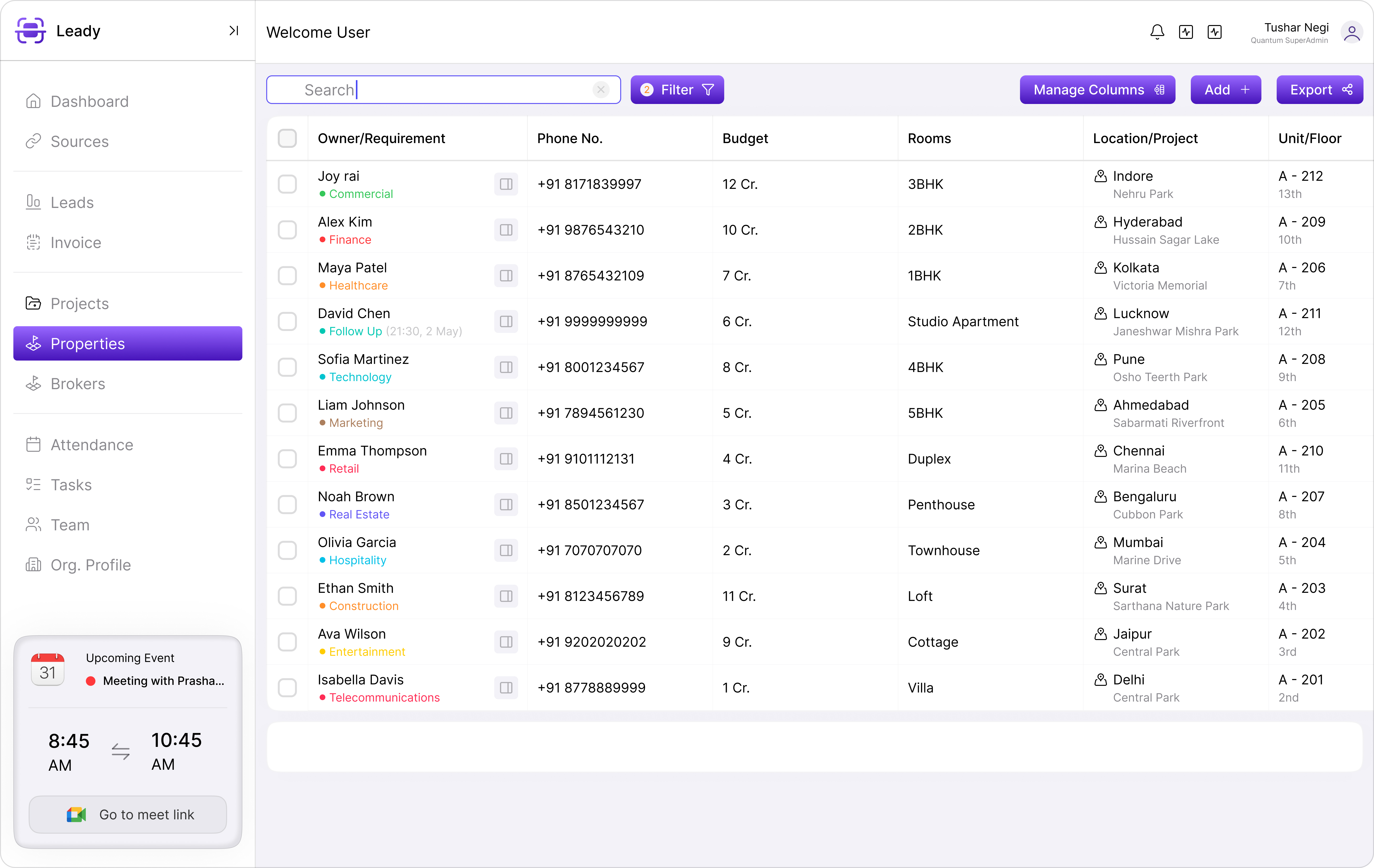
The second half of 2026 brings shifting demand patterns, premium inventory absorption tests, and a buyer cohort that researches on mobile before calling sales. For pre-sales leaders, the question is not just what the market will do — but whether your CRM strategy is built to capture the opportunities ahead.
Tier-2 cities are the growth story
Lucknow, Indore, Coimbatore, and Jaipur are seeing sustained demand driven by infrastructure investment, IT sector expansion, and reverse migration from metros. Developers entering Tier-2 markets need CRM workflows that support smaller teams handling higher lead-to-executive ratios — automation is not optional at this scale.
Premium and luxury segment dynamics
Premium inventory above ₹1.5 Cr is absorbing steadily in Mumbai, Bangalore, and NCR — but buyers expect white-glove follow-up, virtual tours, and NRI-friendly payment structures. CRM must support longer nurture cycles, multi-timezone communication, and executive dashboards that surface HNI pipeline separately from mass-market leads.
Digital-first buyers reshape pre-sales
- 70%+ of first enquiries now originate from digital channels — portals, search, and social
- Buyers compare 4–6 projects before scheduling a single site visit
- WhatsApp is the preferred follow-up channel across age groups, not just millennials
- Video walkthroughs and AR floor plans are becoming baseline expectations for premium launches
RERA and compliance maturity
RERA enforcement continues to favour organised developers with transparent sales processes. CRM audit trails — timestamped lead registration, documented follow-ups, and hold histories — provide compliance evidence and reduce dispute risk. Buyers trust developers who operate with visible process discipline.
“The market is not slowing — it is selecting. Organised developers with digital sales infrastructure are taking share from operators still on Excel.”
— Industry analyst, Indian real estate consultancy
What sales leaders should prioritise in H2 2026
Consolidate lead capture and attribution before increasing marketing spend. Invest in channel partner portals to protect broker referral share. Enable AI-assisted prioritisation as lead volumes grow faster than headcount. And build forecast discipline with stage-weighted pipeline — quarter-end surprises are a process failure, not a market failure.
How Leady Nest customers are positioning
Developers on Leady Nest are doubling down on automation, ERP integration, and multi-project analytics ahead of the festive season launch window. The competitive edge is not more leads — it is faster, more informed conversion of the leads already in the market.
Key takeaways
- Tier-2 cities offer growth but require automation-heavy CRM workflows for lean pre-sales teams.
- Premium buyers expect longer nurture cycles, NRI-friendly processes, and digital-first engagement.
- Digital channels dominate first enquiries — attribution and fast response are critical differentiators.
- RERA maturity rewards developers with documented, auditable sales processes in CRM.
- H2 priorities: consolidate attribution, strengthen partner portals, and enable AI-assisted prioritisation.